On Saturday afternoon, November 21, the communities behind Lean, a programming language that lets computers check a math proof one step at a time, and Mathlib, Lean’s huge shared library of math, posted a joint statement: “We have full confidence that Alpöge’s proof of the Riemann Hypothesis is correct, and we congratulate him on this achievement.” The statement was endorsed by the Lean Focused Research Organization and the Mathlib Initiative. It came about a day after Levent Alpöge, a mathematician on Anthropic’s technical staff, posted on his personal website that he had found a proof while working with Claude, the company’s AI.
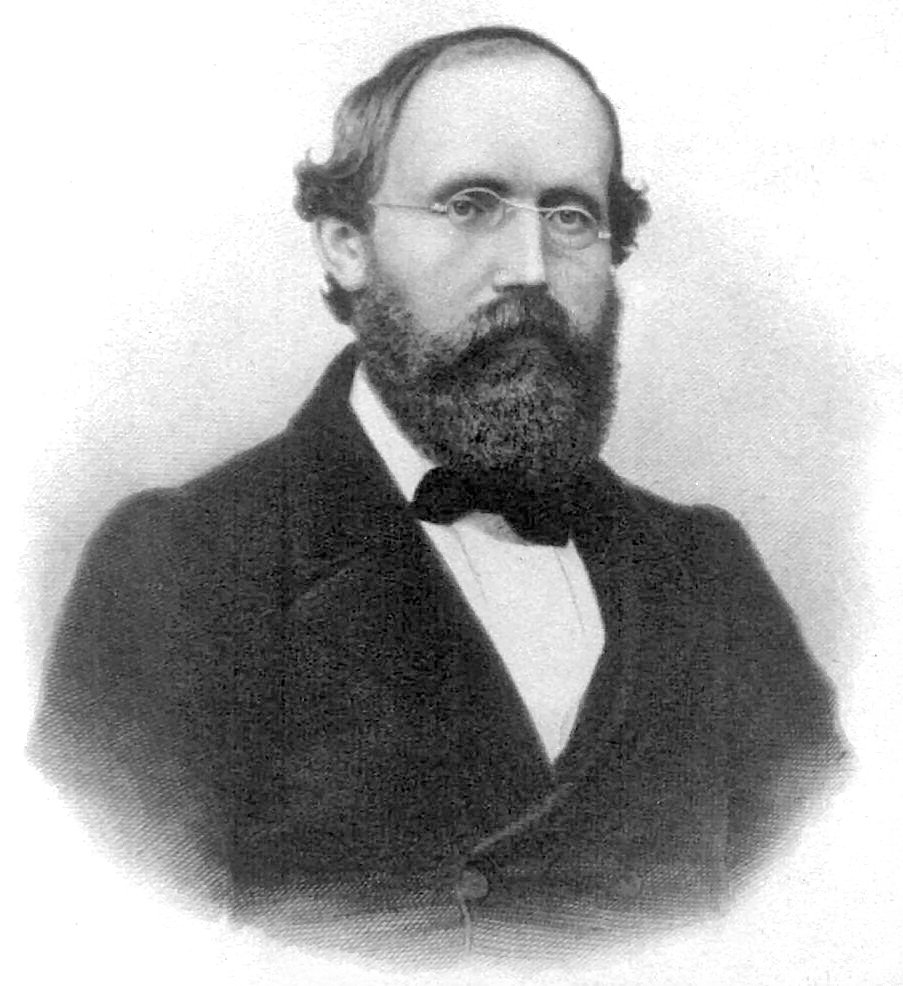
So what is the Riemann hypothesis? It is about prime numbers, whole numbers like 2, 3, 5, 7, and 11 that can only be divided evenly by 1 and themselves. Primes look scattered at random, but in 1859 the German mathematician Bernhard Riemann proposed that a hidden pattern controls how they are spread out, tied to where a special function equals zero. In 2000 the Clay Mathematics Institute picked it as one of seven Millennium Prize Problems and offered $1 million for each one solved. In the quarter-century since, only one of the seven, the Poincaré conjecture, has been officially solved, The Verge notes.
Instead of waiting for human experts to read every line, the math community let computers do the heavy lifting, and the checking took about a day. Alpöge released his proof as a Lean library of 17 million lines of code. According to the Lean and Mathlib statement, volunteers confirmed four things: the way the hypothesis is written in Mathlib is correct; the code compiles, which dozens of people reproduced; two separate tools showed the theorem proved is exactly the Riemann hypothesis, not a sneaky look-alike; and several independent proof checkers, including Lean’s official one and others written in different programming languages, accepted it. Two of those checkers come with their own formal proof that they cannot accept a false proof.
How much did the AI do? Alpöge wrote that the work took about six weeks, The Guardian reports, and that the collaboration produced more than 250,000 pages of mathematical material, according to DW. He said he has not yet mastered all of the math involved. “Claude and I have had a great time together with such breadth in recent months, but this time Claude far outpaced me near the finish line,” he wrote. He also says the method goes further and settles a broader version called the Generalized Riemann Hypothesis; that wider claim was not part of Saturday’s statement. He posted his note one day after Anthropic’s first day as a public company and wrote, “The precise timing is horrible,” The Guardian reports. Anthropic had not commented on the announcement as of Friday, according to The Verge. In August, the company had said it did not expect the techniques Claude used to lead to a proof.
A computer saying “correct” is not the same as people understanding why. Clay Mathematics Institute President Martin Bridson called it “an announcement of historic significance,” but added, “the journey from today’s announcement to a place of real understanding will be long and difficult,” according to the Associated Press as quoted by DW. Under the institute’s rules, a solution must be published, survive at least two years of scrutiny, and win general acceptance from mathematicians before it can be considered for the $1 million prize. The Lean and Mathlib groups ended their statement by saying they look forward to work across the math world “that will help explain the new ideas in this proof.”
The result lands in the middle of a fast and sometimes uncomfortable shift in math. In September, OpenAI said its AI helped solve the Navier-Stokes problem, another Millennium Prize Problem, using about 10,000 AI agents and millions of dollars. That result has not been formally recognized and drew accusations that it used mathematicians’ unpublished work, which OpenAI strongly denies, The Verge reports. Some mathematicians have criticized tech companies for spending huge sums on these contests, The Guardian notes.
What happens next: mathematicians will start digging through the proof to find the new ideas inside it, the Clay institute’s two-year clock depends on formal publication, and researchers will be watching whether Alpöge’s claim about the broader hypothesis holds up too.