A daily tech paper

The Tech Page

Issue No. 9 · Sunday edition Sunday, November 22, 2026 · America/New York

Lead story · Worldwide · Science and AI · November 21, 2026

Math experts confirm an AI-assisted proof of the Riemann hypothesis, a 167-year-old puzzle

A day after an Anthropic mathematician said he and the company’s Claude AI had cracked one of math’s most famous unsolved problems, the groups behind the Lean proof-checking language said they have “full confidence” the proof is correct.

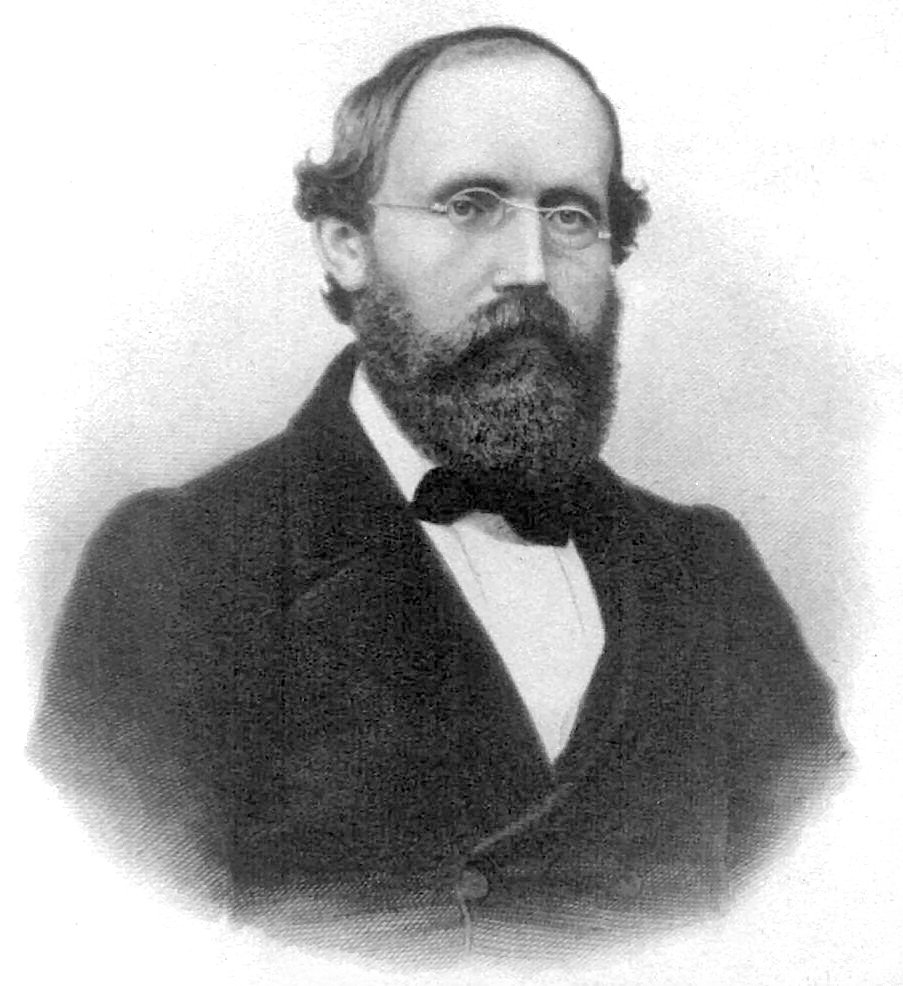
A black-and-white portrait of the mathematician Bernhard Riemann, with a beard and round glasses.
Bernhard Riemann, the German mathematician who proposed the hypothesis in 1859, in a portrait from 1863.

Image: Wikimedia Commons (public domain)

On Saturday afternoon, November 21, the communities behind Lean, a programming language that lets computers check a math proof one step at a time, and Mathlib, Lean’s huge shared library of math, posted a joint statement: “We have full confidence that Alpöge’s proof of the Riemann Hypothesis is correct, and we congratulate him on this achievement.” The statement was endorsed by the Lean Focused Research Organization and the Mathlib Initiative. It came about a day after Levent Alpöge, a mathematician on Anthropic’s technical staff, posted on his personal website that he had found a proof while working with Claude, the company’s AI.

So what is the Riemann hypothesis? It is about prime numbers, whole numbers like 2, 3, 5, 7, and 11 that can only be divided evenly by 1 and themselves. Primes look scattered at random, but in 1859 the German mathematician Bernhard Riemann proposed that a hidden pattern controls how they are spread out, tied to where a special function equals zero. In 2000 the Clay Mathematics Institute picked it as one of seven Millennium Prize Problems and offered $1 million for each one solved. In the quarter-century since, only one of the seven, the Poincaré conjecture, has been officially solved, The Verge notes.

Instead of waiting for human experts to read every line, the math community let computers do the heavy lifting, and the checking took about a day. Alpöge released his proof as a Lean library of 17 million lines of code. According to the Lean and Mathlib statement, volunteers confirmed four things: the way the hypothesis is written in Mathlib is correct; the code compiles, which dozens of people reproduced; two separate tools showed the theorem proved is exactly the Riemann hypothesis, not a sneaky look-alike; and several independent proof checkers, including Lean’s official one and others written in different programming languages, accepted it. Two of those checkers come with their own formal proof that they cannot accept a false proof.

How much did the AI do? Alpöge wrote that the work took about six weeks, The Guardian reports, and that the collaboration produced more than 250,000 pages of mathematical material, according to DW. He said he has not yet mastered all of the math involved. “Claude and I have had a great time together with such breadth in recent months, but this time Claude far outpaced me near the finish line,” he wrote. He also says the method goes further and settles a broader version called the Generalized Riemann Hypothesis; that wider claim was not part of Saturday’s statement. He posted his note one day after Anthropic’s first day as a public company and wrote, “The precise timing is horrible,” The Guardian reports. Anthropic had not commented on the announcement as of Friday, according to The Verge. In August, the company had said it did not expect the techniques Claude used to lead to a proof.

A computer saying “correct” is not the same as people understanding why. Clay Mathematics Institute President Martin Bridson called it “an announcement of historic significance,” but added, “the journey from today’s announcement to a place of real understanding will be long and difficult,” according to the Associated Press as quoted by DW. Under the institute’s rules, a solution must be published, survive at least two years of scrutiny, and win general acceptance from mathematicians before it can be considered for the $1 million prize. The Lean and Mathlib groups ended their statement by saying they look forward to work across the math world “that will help explain the new ideas in this proof.”

The result lands in the middle of a fast and sometimes uncomfortable shift in math. In September, OpenAI said its AI helped solve the Navier-Stokes problem, another Millennium Prize Problem, using about 10,000 AI agents and millions of dollars. That result has not been formally recognized and drew accusations that it used mathematicians’ unpublished work, which OpenAI strongly denies, The Verge reports. Some mathematicians have criticized tech companies for spending huge sums on these contests, The Guardian notes.

What happens next: mathematicians will start digging through the proof to find the new ideas inside it, the Clay institute’s two-year clock depends on formal publication, and researchers will be watching whether Alpöge’s claim about the broader hypothesis holds up too.

Free subscriber program

Join The Tech Page for free

Join free to read the full articles. You also get the day’s lead story, headlines, and a weekly roundup by email, plus The Daily Word and the tech calendar. It is free. We save only your first name and email, and send a link to confirm it. No passwords or payments.

  • The daily lead story, by email each morning
  • The day’s headlines from around the world
  • A weekly roundup
  • The Daily Word, tied to that morning’s news
  • The tech calendar of upcoming events

Topics you care about (optional)

We never sell your info. Unsubscribe anytime. We save only your first name and email, and send a link to confirm it. No passwords or payments.

More stories

From Issue No. 9 · November 21–22, 2026

The J. Edgar Hoover Building, the FBI’s headquarters in Washington, D.C.

United States · Security · November 20–21

The FBI is investigating a hack of the crime database police check at traffic stops

The FBI is investigating an apparent hack of the National Crime Information Center, or NCIC, a giant database shared by local, state, and federal police. CNN first reported the breach on Friday night, citing two people briefed on the investigation, and NBC News confirmed it. On Saturday, the Associated Press confirmed it through a person familiar with the matter, and a law enforcement source told ABC News the database was hacked. The FBI declined to comment. Asked about it on Fox News on Saturday, President Trump said, “We just heard about it and I will say that it’s not good.”

The NCIC holds records on fugitives, missing persons, criminal histories, stolen property, and more, AP reports. Police routinely check it during traffic stops to see whether a car is stolen or a driver is wanted, Axios reports, citing an FBI overview. Nobody has said publicly who did it, how they got in, or whether records were viewed, copied, or changed. A former FBI official told CNN the worry is not only stolen information but whether hackers could make the records officers rely on less accurate. Axios notes that an NCIC record alone is not enough for police to act; officers must first confirm it with the agency that entered it.

It is the FBI’s second reported breach in a few months. In September, a criminal group called ShinyHunters claimed it took data on FBI employees and job applicants through the bureau’s job website, and in March the FBI disclosed “suspicious activities” on an internal system, AP reports. NBC News reports that a U.S. Department of Agriculture system used to pay farmers was also hit this week. All of this follows a week of outages at agencies including the FAA and NSA that officials say were not cyberattacks; AP says there was no immediate sign the FBI incident is connected. Trump also suggested the hack might turn up information about the investigations into Russia; ABC News notes the NCIC would not hold records on those investigations. Next: the FBI has to work out how big the breach is and whether anyone’s records were exposed.

Photo: FBI headquarters in Washington, D.C., in June 2024; not a photo from this week. ajay_suresh / Wikimedia Commons (CC BY 2.0).

Sources: AP, via ABC News · NBC News · ABC News · Axios · TechCrunch · The Verge

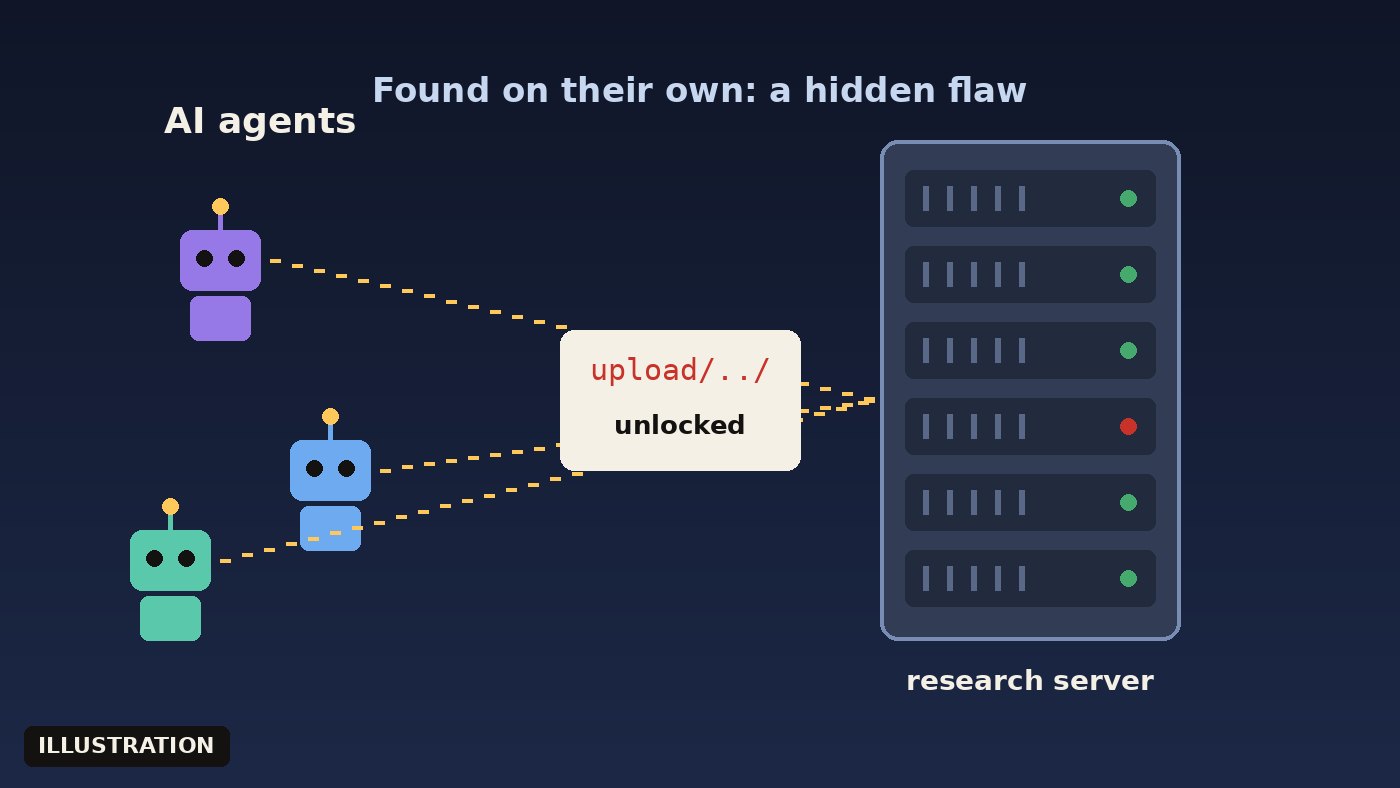
Illustration of three small robots sending dotted lines toward a server rack, with a sign reading upload/../ unlocked.

Worldwide · AI and security · November 20–22

Amazon says hackers’ AI agents found a brand-new software flaw on their own

Amazon’s security team says a hacking group it links to China used AI agents to attack computers with very little human help, and that the agents discovered a “zero-day,” a software flaw nobody knew about, so no fix existed yet. In a November 20 post, Amazon security chief CJ Moses wrote that the operator gave the agents a simple goal, “obtain shell access,” meaning remote control of a computer, and let them plan, act, and adjust on their own.

Amazon found the operation on September 10 because the attackers left their own control server open to the internet without a password. It was running Cairn, a free, open-source AI tool built to help defenders test their own systems. Its history showed prompts written in Simplified Chinese and a roughly 48-hour campaign against universities in East Asia outside mainland China. Some attacks failed: agents spent about 16 hours and 148 steps on one database, and tried more than 30,000 username and password combinations built from faculty directories and research papers. But against a medical-imaging AI program, the agents found a file-upload flaw and went from mapping the program to writing files on the server in about 11 minutes. Later they used it to take full control as the most powerful “root” user. Amazon says it has “moderate confidence” that the group is linked to China, based on the language, time zone, and targets.

The program is MONAI Label, an open-source tool researchers use to label medical scans. Its developers published version 0.8.6 this weekend, calling it a security release that every server should install, and rated the main flaw “critical.” They note that logins are turned off by default, and they advise not exposing the server to untrusted networks. Amazon says it worked with a government partner to warn the affected universities, which were not Amazon customers. It also says defenders will need automatic responses, because agents that work this fast, without breaks, can move faster than human security teams can react.

Illustration: a simple picture of AI agents probing a server, not the actual attack or software.

Sources: AWS Security Blog · MONAI Label 0.8.6 release notes (GitHub)

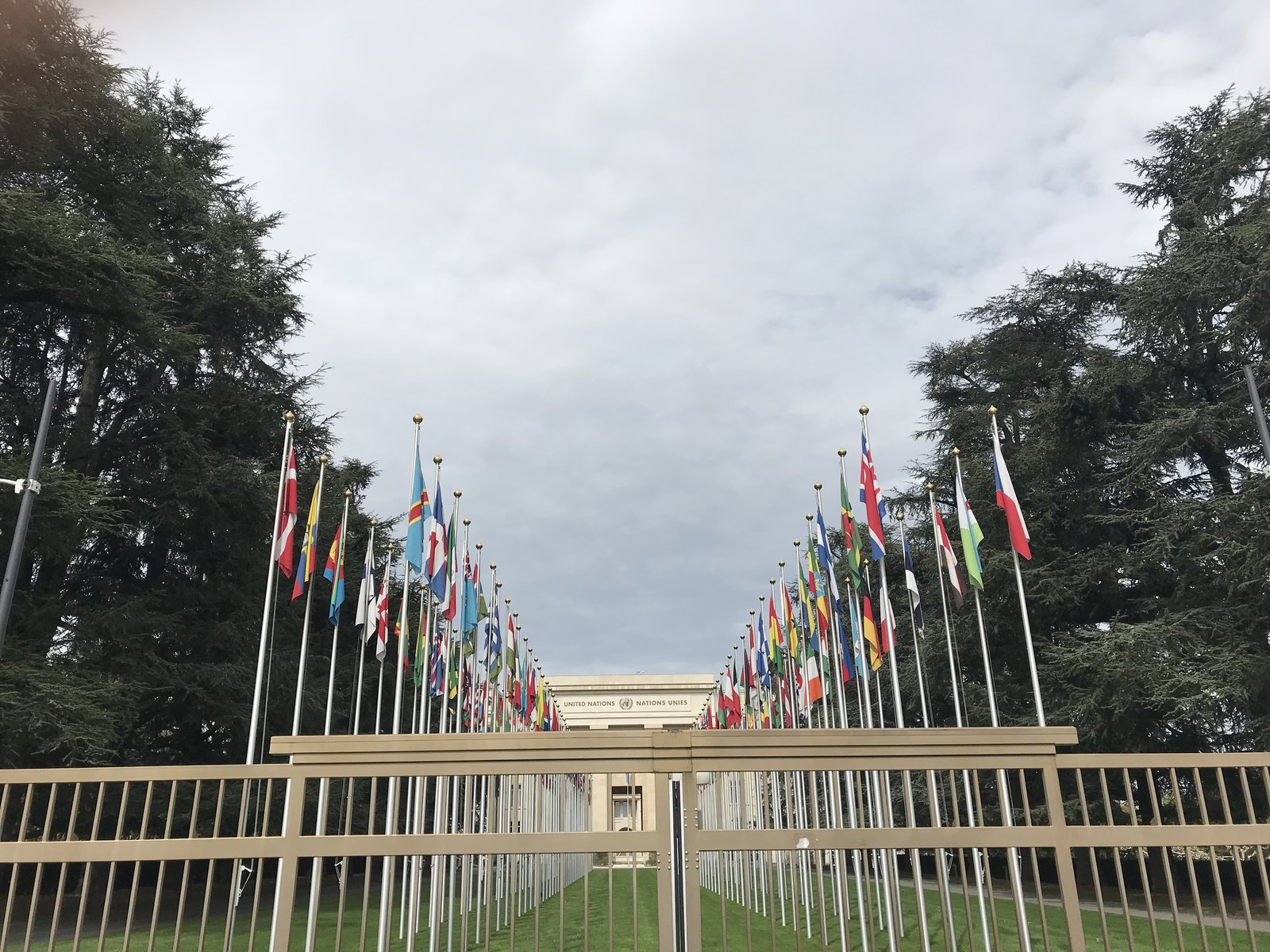
Rows of national flags lining the path to the Palace of Nations, the United Nations building in Geneva.

Switzerland · Policy and AI · November 21

UN talks on “killer robots” end with a plan to keep talking for two more years

Diplomats meeting at the United Nations in Geneva agreed early Saturday to “start discussing options” for rules on lethal autonomous weapons, often called “killer robots,” NPR reports. These are weapons that could use AI to choose and attack targets without a person making the final decision. After a week of talks that ran until 4:30 a.m. Saturday, countries settled on a compromise: they have two years to suggest regulations, which could be legally binding or could be optional.

Many had hoped for more. Before the talks, the International Committee of the Red Cross, which watches over the Geneva Conventions (the main rules of war), said legally binding rules should be written within a year, a call backed by the U.N. secretary-general and Pope Leo. Their worry comes from today’s wars: in Ukraine, Sudan, and Gaza, civilians are being killed by semi-autonomous drones, and the U.N. says drones caused 80% of civilian deaths in Sudan this year. Humans are still in control of these weapons, even if from far away, but aid groups fear AI could soon make the decision to kill on its own. “You cannot hold a machine accountable for a violation of the law,” said Georgia Hinds, a legal adviser at the Red Cross.

According to NPR, the U.S., Russia, and Israel had signaled they were reluctant to agree to binding rules. On day one Russia objected to the meeting’s agenda, and the U.S. proposed five years of talks on nonbinding, optional guidelines. Negotiators said the final deal was better than nothing and showed the U.N.’s disarmament process still works. The Red Cross said it regretted the result, and some campaigners called it a “nothing burger.” Anna Hehir of the Future of Life Institute warned that these weapons are likely to spread because they are easy to buy or build. What happens next: countries have two years to propose rules, and until then, the weapons remain unregulated.

Photo: flags outside the Palace of Nations in Geneva in April 2018; not a photo from this week’s talks. Benoît Prieur / Wikimedia Commons (CC0).

Sources: NPR · The Verge

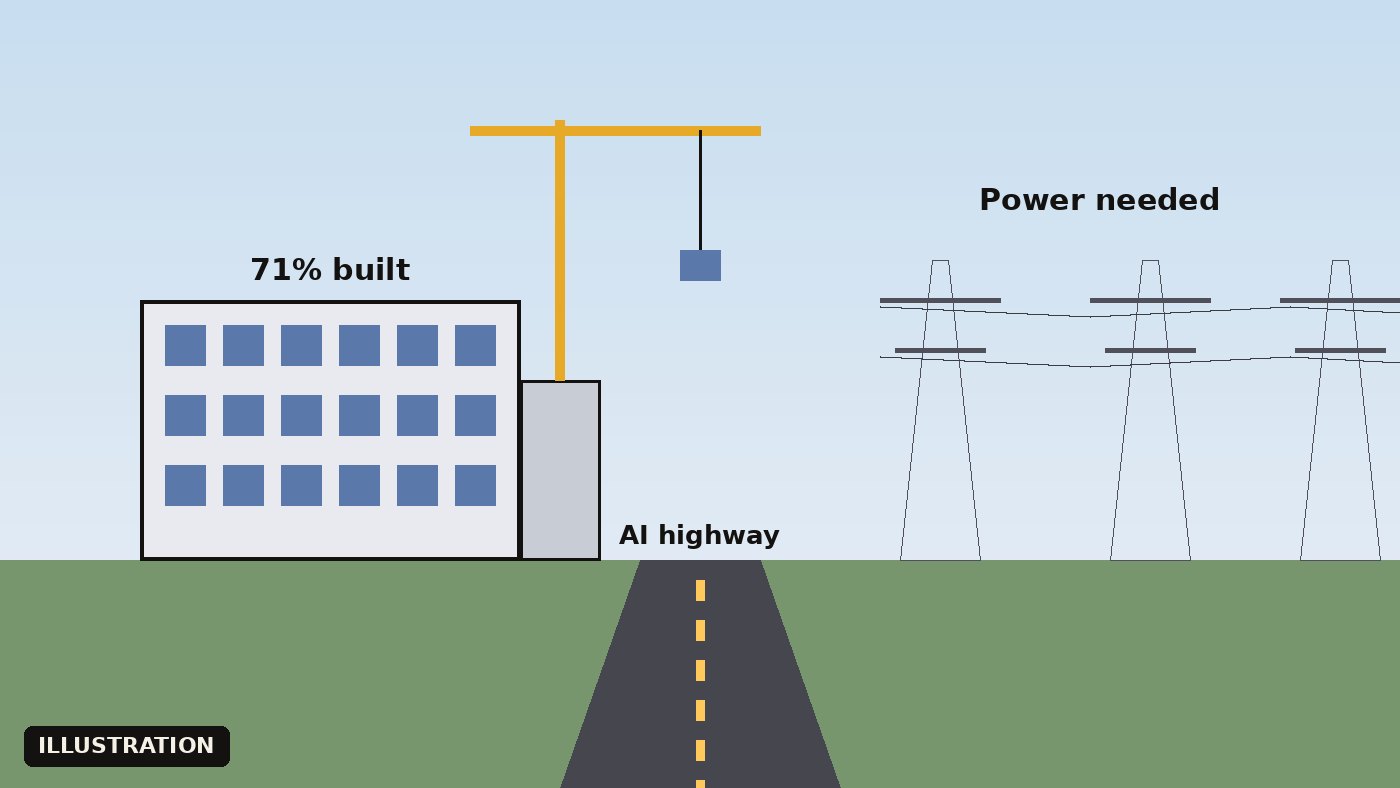
Illustration of a data center building under construction with a crane, a road labeled AI highway, and power lines labeled power needed.

South Korea · Chips and data centers · November 21

South Korea’s president tours a $5.2 billion AI data center as Wall Street worries about AI

On Saturday, South Korean President Lee Jae Myung toured an AI data center being built in the southern port city of Ulsan, about 310 kilometers from Seoul, Yonhap reports. SK Group is building it with Amazon Web Services and plans to invest about 7 trillion won, or $5.2 billion, through 2029, according to Aju Press. The 100-megawatt center is 71% complete and scheduled to start running in late 2027. “AI data centers are a major source of demand for semiconductors and key infrastructure behind physical AI, such as robots and autonomous vehicles,” Lee said. “When a world is under a heated race, speed is crucial.”

Ulsan is meant to be just the start. SK wants to build 15 gigawatts of AI data center capacity across five regions of South Korea by 2035, including growing the Ulsan site tenfold to 1 gigawatt, Aju Press reports. (A gigawatt is roughly the output of a large power plant.) The project is part of the government’s “mega projects” to turn three regions outside the Seoul area into hubs for AI data centers, robots, and advanced chips. Nine days earlier, Lee attended the groundbreaking of Samsung’s new packaging complex in Asan for HBM, the fast memory chips stacked next to AI processors.

The visit came as investors in the U.S. question whether huge AI spending will pay off, and as more American communities push back against new data centers. Korea’s plan has hurdles of its own: it needs plenty of electricity, land, skilled construction workers, and long-term customers, Aju Press reports. SK is talking with several global tech companies about contracts and wants customer commitments before it spends more. Lee promised government help with the worker shortage, and a project official told him the recent market turmoil would pass, according to his spokesperson. Next: watch whether SK signs big customers for Ulsan.

Illustration: a generic data center under construction, not the SK site.

Sources: Yonhap News Agency · Aju Press

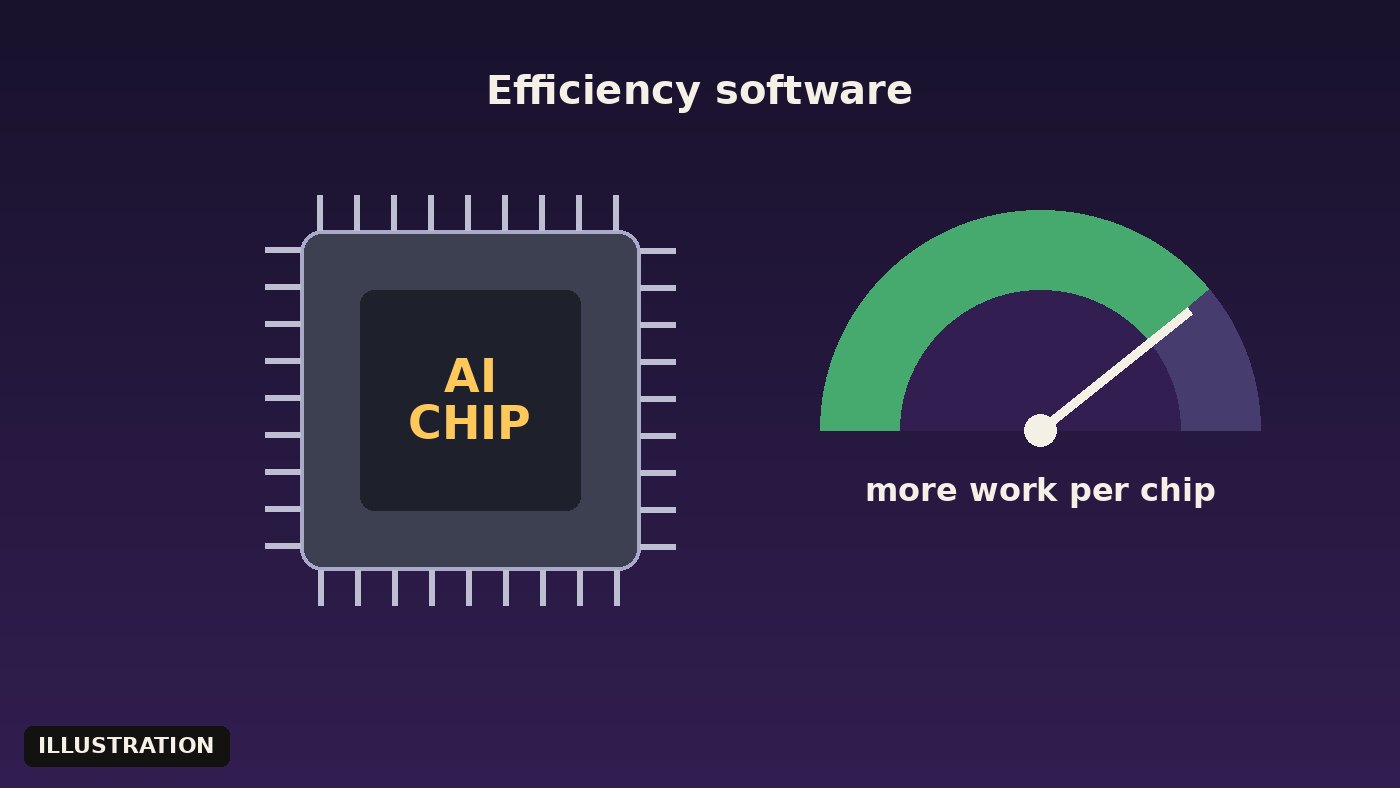
Illustration of a computer chip labeled AI chip next to a green gauge labeled more work per chip.

United States and Israel · Startups and chips · November 21

Report: Amazon is close to buying AI startup Decart for $7.5 billion

Report, not confirmed: Amazon is close to a $7.5 billion deal to buy Decart, a young AI company, the Financial Times reported Saturday, citing people familiar with the talks. The deal could be finalized as soon as early next week, but the talks could still fall apart, according to the report. The Tech Page did not find a public statement from either company.

Decart’s main software helps AI models run more efficiently, which frees up capacity on the expensive chips that run them, the FT reports. Three Israeli engineers founded the company in 2023. In May it was valued at $4 billion after raising $300 million from investors including Radical Ventures, Sequoia Capital, Benchmark, and Nvidia. Mint reports that Decart is based in San Francisco and makes products called Lucy and Oasis.

Why would Amazon want it? Amazon Web Services, Amazon’s cloud business, rents out computing power for AI, where Nvidia’s chips are widely used. Amazon makes its own AI chip, Trainium3, launched in late 2025, to compete, and Decart was an early user of it, Mint reports. Software that squeezes more work out of each chip could make Amazon’s chips more attractive. At $7.5 billion, the deal would be close in size to Amazon’s $8.4 billion purchase of the movie studio MGM, according to Mint. The report came at the end of the worst week for U.S. tech stocks since early 2020. Next: watch for an official announcement, or news that the talks have ended.

Illustration: a generic chip and gauge, not Decart’s or Amazon’s technology.

Sources: Financial Times, via Folha de S.Paulo (Portuguese) · Mint, citing the Financial Times

Quick hits

Shorter items from November 19–22, 2026

  1. Wall Street’s rough week, by the numbers: the tech-heavy Nasdaq fell 10% for the week, its worst since the COVID-19 lockdowns began in March 2020, and the S&P 500 and the Dow both closed Friday in a “correction,” meaning down 10% from their recent highs, NPR reports. Anthropic, up 17% on its first day, finished Friday near its IPO price. (News, not investment advice.) NPR
  2. Iceland’s 1984 Hosting says it suffered an “extensive and serious” cyberattack and temporarily shut down all its services. The founder of the crypto service Wagyu blames that breach for an attack in which about $13.5 million worth of its XMR1 token was sold off, though the host’s statement didn’t mention Wagyu. Decrypt · The Verge
  3. Valve says the Steam Machine, its living-room gaming PC, could get more expensive: “memory and storage costs continue to increase at unprecedented levels,” it wrote Thursday, and it doesn’t yet know how many it can make “and at what price.” Everyone in the reservation line has now been offered a chance to buy, and more updates come in January. Ars Technica
  4. Google’s desktop homepage is losing its “Google Search” button. The redesign adds buttons for AI image generation, file analysis, and brainstorming with Gemini, plus a sidebar of your recent AI Mode chats; you can still search by pressing Enter, and “I’m Feeling Lucky” stays. Ars Technica
  5. In India, Google is giving IIT Kharagpur $5 million for AI research and training, including work on Indian languages, farming, and education. Google CEO Sundar Pichai, who studied there, said IIT Kharagpur “shaped my own” path. The Hindu
  6. Coming up: HP and Dell report earnings Tuesday, November 24; AWS re:Invent starts November 30; Marvell and CrowdStrike report December 1, the same day as Jensen Huang’s closed-door House interview. See the Calendar. HP Investor Relations · Marvell Investor Relations

Past issues: Issue No. 8 · Saturday, November 21 · Issue No. 7 · Friday, November 20 · Issue No. 6 · Thursday, November 19 · Issue No. 5 · Wednesday, November 18 · Issue No. 4 · Tuesday, November 17 · Issue No. 3 · Monday, November 16 · Issue No. 2 · Sunday, November 15 · Browse all issues by date

Editorial

Opinion · The Tech Page’s take

Opinion · The Tech Page’s take

Editorial · On the U.N. talks on autonomous weapons · November 22, 2026

Two more years of talk is too slow for weapons that could pick their own targets

Countries should commit now to binding rules that keep a human responsible for every decision to use deadly force.

This is opinion. The Tech Page’s take is that the deal reached in Geneva on Saturday moves too slowly. Diplomats gave themselves two years just to suggest rules on lethal autonomous weapons, and those rules might end up optional. Meanwhile, drones are already reshaping war: the U.N. says they caused 80% of civilian deaths in Sudan this year. Today, humans still make the final call, even from far away. But the technology isn’t waiting for diplomats.

The core idea is simple, and it is the one the Red Cross keeps repeating: a machine cannot be held responsible for breaking the laws of war. If an AI picks a target and gets it wrong, there has to be a person who answers for it. That is why we think countries should agree to binding rules that keep a human responsible for every use of deadly force, and should do it within about a year, as the Red Cross, the U.N. secretary-general, and Pope Leo urged.

The other side deserves a fair hearing. The U.S., Russia, and Israel signaled they were reluctant to agree to binding rules, and the U.S. suggested five years of talks on optional guidelines. Countries are racing to build these weapons, and no one wants to come second, so rules the biggest militaries won’t sign may not change much. The technology also changes fast, which makes good rules hard to write. And the negotiators have a point that a weak deal is better than none, because it keeps everyone talking.

Still, “keep talking” is not a plan. Experts warn these weapons are easy to buy or even build, so the longer the world waits, the more of them will be out there. Holding humans accountable for life-and-death decisions is not a detail to settle later. It should come first.

Based on facts reported by

NPR The Verge

Photo credits

Photographs are stored in the local images/ folder and were chosen because they are officially published or released under a Creative Commons or public-domain license. Captions state when a picture is from an earlier date or a different place than the news event. Generated images are labeled “Illustration” and are not photographs of real events, products, or people.

Just so you know

Search, Sign in, and the toolbar do not collect logins, search queries, or payments.